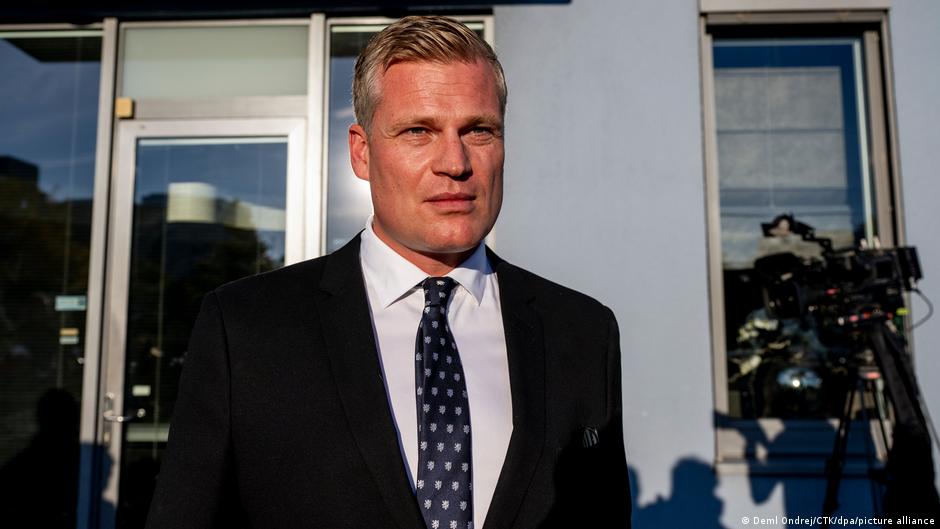
In a decisive move that underscores the critical importance of integrity in public service, Czech President Petr Pavel has rejected the nomination of Filip Turek for the post of Environment Minister. This bold stance, taken amidst a wave of disturbing allegations against Turek, sends a clear message about the standards of conduct expected from those who serve at the highest levels of government.
Filip Turek, nominated by election-winner Andrej Babis, found his candidacy swiftly derailed by a barrage of claims regarding his past online activity and associations. Reports surfaced detailing alleged racist, sexist, and homophobic posts on social media, alongside accusations of displaying Nazi symbols, including the Hitler salute, and flaunting SS insignia on his vehicles. For any nation committed to democratic values and social cohesion, such allegations are not merely a cause for concern; they are a direct challenge to the very fabric of society.
President Pavel, a figure known for his measured yet firm approach, articulated his decision with clarity. He stated unequivocally that he "cannot nominate someone for a ministerial position whose values do not correspond to the values I represent." This sentiment goes beyond personal preference; it speaks to the fundamental requirement for public officials to embody principles of respect, equality, and unity. In a role as significant as Environment Minister, one needs a leader capable of forging consensus and driving positive change, not one whose background threatens to deepen societal divisions.
While Mr. Turek has dismissed the allegations as a politically motivated "smear campaign" and defended his actions as merely being a collector of "historical artifacts" related to World War II, claiming a photo of him giving a Hitler salute was merely "a joke," such explanations often fail to reassure a public rightly concerned about the potential for extremist views to penetrate government. The gravity of the accusations, particularly those involving symbols of hate and oppression, demands a higher degree of accountability and transparency from aspiring leaders.
For families, prospective clients, and middle-class citizens, this situation resonates deeply. The security of a nation is not solely defined by its military strength or economic prowess; it is equally dependent on the moral and ethical fortitude of its leadership. When individuals with histories tainted by allegations of extremism or bigotry are considered for public office, it erodes trust in institutions, threatens social harmony, and sets a dangerous precedent for future generations. President Pavel's action serves as a vital safeguard, demonstrating that the office of the President is prepared to protect democratic principles and ensure that those who govern are truly fit to represent all citizens.
The rejection of Filip Turek is a powerful reminder that vigilance against extremism and the unwavering commitment to democratic values are non-negotiable. It reinforces the expectation that public service is a privilege demanding impeccable character, integrity, and a steadfast dedication to uniting, rather than dividing, the populace. In an increasingly complex world, leadership must not only be competent but also ethically unimpeachable, setting an example of respect and inclusivity for all.
365 Intelligence
Upholding Democracy: Czech President Rejects Controversial Cabinet Nominee Amidst Allegations of Extremism
Czech President Petr Pavel has rejected Filip Turek, a controversial cabinet nominee, amidst widespread allegations of racist, sexist, homophobic posts and the display of Nazi symbols, underscoring a…
November 28, 2025·Sentry365 News Team·2 min read