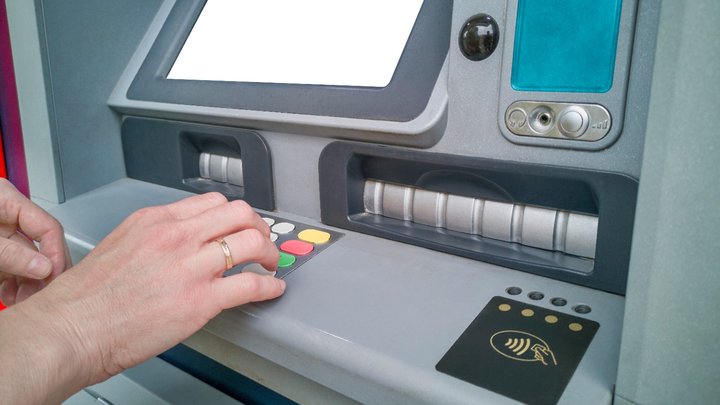
The "Jackpotting" Crisis: Inside the Malware Turning U.S. ATMs into Criminal ATMs
1. Introduction: The Ghost in the Machine
Picture a deserted bank vestibule at 3:00 AM. The street is silent, but inside, the ATM is humming with frantic, mechanical energy. There is no customer, no card in the slot, and no transaction appearing on the bank’s central monitor. Yet, beneath the flickering blue glow of the screen, the machine is performing a rhythmic thwack-thwack-thwack—spitting out stacks of twenty-dollar bills onto the floor like a broken slot machine.
This isn't a mechanical failure; it’s a digital execution. The FBI’s recent internal "FLASH" alert paints a chilling picture of "Ploutus," a malware strain that has unmasked a glaring vulnerability in the heart of our financial infrastructure. We aren't looking at a traditional data breach involving stolen identities or fished passwords. We are witnessing a direct physical heist powered by code—a "jackpotting" attack that turns a multi-ton vault into a submissive cash dispenser.
2. Takeaway 1: No Card, No Account, No Problem
The terrifying brilliance of a jackpotting attack lies in its total disregard for the traditional banking credential. For decades, the industry has obsessed over protecting the "data"—your PIN, your account number, your CVV. Ploutus renders this entire security apparatus irrelevant. The malware bypasses the need for a bank card, a customer account, or any authorization from the bank’s backend servers.
Investigators have unmasked a fundamental paradigm shift: security is no longer just about protecting digital records; it is about protecting the physical dispenser itself. In the eyes of the malware, the ATM is no longer a portal to a bank; it is merely a standalone box of currency waiting for the right command.
"Ploutus effectively turns the ATM into a standalone cash machine under criminal control."
3. Takeaway 2: The XFS Layer—The ATM’s Hidden Achilles' Heel
To execute this heist, Ploutus exploits the eXtensions for Financial Services (XFS) software layer. Think of XFS as the universal translator of the ATM world—a standard interface that allows software to communicate with hardware components like the cash dispenser, card reader, and printer.
By "abusing" this layer, Ploutus cuts the legitimate banking application out of the conversation. The malware issues direct, unauthorized commands to the hardware, forcing the dispenser to release its contents on demand. Because XFS is a standard architectural requirement across the industry, it provides the malware with a "write-once, attack-anywhere" capability. Since these machines almost universally run on underlying Windows systems, a single strain of Ploutus can be adapted to drain ATMs from various manufacturers with minimal code modifications.
4. Takeaway 3: A Low-Tech Breach for a High-Tech Crime
There is a profound, almost cynical irony in the fact that these sophisticated cyber-heists begin not with a zero-day exploit, but with a $5 piece of metal. Attackers frequently gain initial access to the ATM’s "brain" by using widely available generic keys that match standard manufacturer locks. While banks spend millions on high-end encryption, they are being undone by physical security that is effectively obsolete.
Once the cabinet is breached, the criminals follow a specific tactical playbook to stage and interact with the malware:
* Malware Staging (Hard Drive Manipulation): Criminals often remove the ATM’s hard drive, connect it to a laptop to load the Ploutus code, and then reinstall it. In more aggressive scenarios, they replace the original drive entirely with a pre-loaded foreign drive.
* System Interaction: Attackers utilize USB hubs, keyboards, and flash drives connected directly to the internal ports to navigate the infected OS.
* Persistence via Remote Access: Unauthorized tools like AnyDesk or TeamViewer are frequently installed, allowing the "mules" at the machine to be guided by remote handlers in real-time.
5. Takeaway 4: The 20-Million-Dollar Surge
The numbers provided by the FBI’s emergency alert suggest this is no longer a niche threat—it is a full-blown crisis. In 2025 alone, the Bureau recorded over 700 jackpotting attacks, resulting in more than $20 million in losses. This represents a sharp, aggressive increase, bringing the total number of incidents tracked since 2020 to nearly 1,900.
The "smoking guns" left behind in these machines are a series of digital fingerprints. Forensic investigators have identified specific malicious executables and logs that signal a compromise:
* Malicious Executables: Newage.exe, Color.exe, Levantaito.exe, NCRApp.exe, Promo.exe, WinMonitor.exe, WinMonitorCheck.exe, and Anydesk1.exe.
* Support & Logs: Restaurar.bat and the log file C.dat.
These attacks are notoriously difficult to stop because they are "silent" by design. Because the malware operates entirely outside of normal banking transaction protocols, the bank’s central server remains under the illusion that the ATM is idle and secure, even as the machine is emptying its bowels into a criminal’s duffel bag.
6. Takeaway 5: The Silver Lining—Your Personal Account is Safe
In a rare departure from the usual cybersecurity narrative, the general public is not the primary target. This is a victimless crime for the consumer, but a terminal illness for the ATM. Ploutus is designed to steal the bank’s physical currency, not your digital assets. It does not harvest PINs, skim card data, or drain individual checking accounts.
For the average citizen, the role shifts from potential victim to witness. The FBI’s public awareness guide notes that the only real action for consumers is vigilance. If you see an ATM with exposed internal components, or individuals who clearly aren't authorized technicians connecting USB hubs and external drives to a machine, you aren't watching a routine repair—you are witnessing a high-stakes heist in progress.
7. Summary & The Road Ahead
The FBI’s recommendations for financial institutions are no longer "optional best practices"; they are survival requirements in the jackpotting era. Hardening the perimeter requires replacing default locks with unique keyed barriers and installing vibration and temperature sensors to detect physical tampering. On the digital front, banks must move toward "gold image" baselining—cryptographically verifying every file on the system to ensure the machine hasn't been replaced by a malicious twin—alongside aggressive software whitelisting and hard drive encryption.
As we move further into a world of digital finance, the "jackpotting" crisis serves as a stark reminder that as long as we have physical cash, we will have physical vulnerabilities.
Final Thought: As our currency remains physical but the locks become digital, is the traditional ATM becoming a liability that banks can no longer afford to ignore?
365 Intelligence
The "Jackpotting" Crisis: Inside the Malware Turning U.S. ATMs into Criminal ATMs
"Ploutus effectively turns the ATM into a standalone cash machine under criminal control."
February 23, 2026·J. A. Aliaga·5 min read