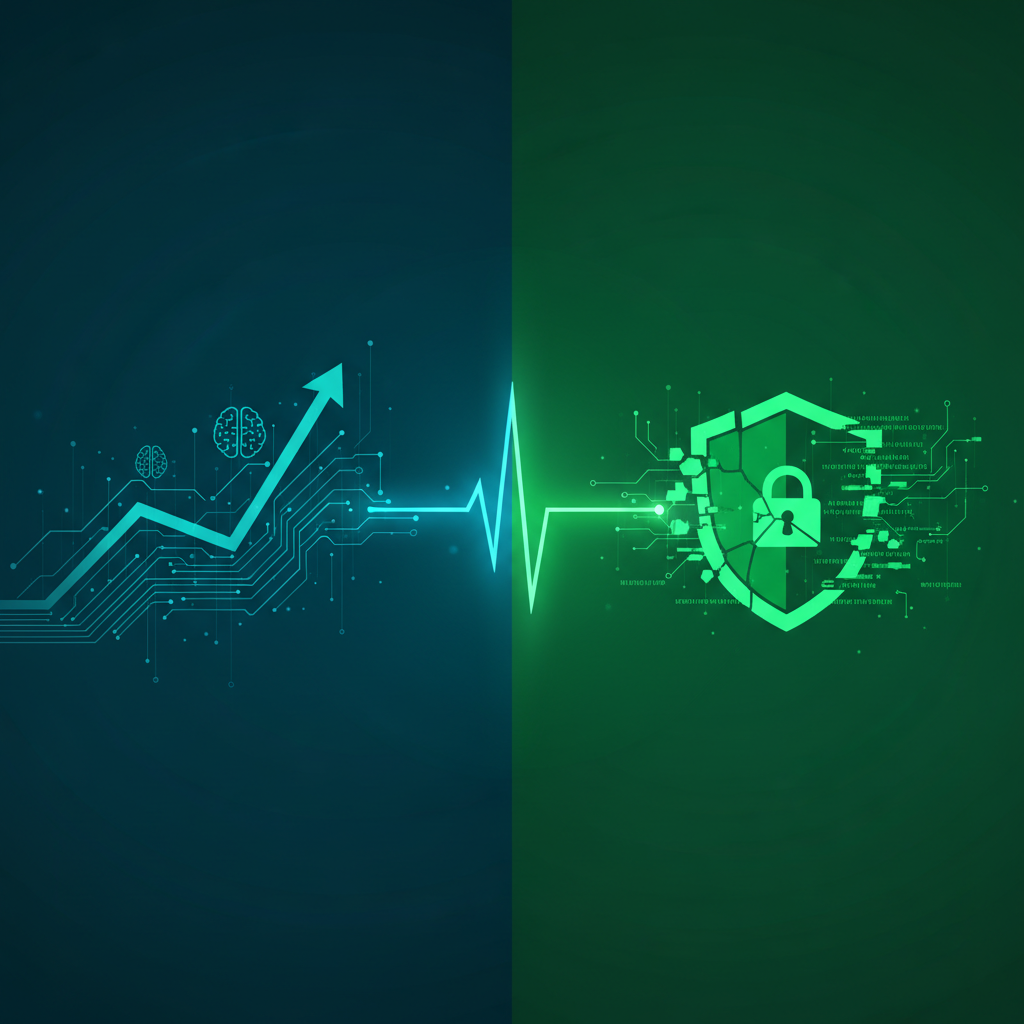
The integration of Artificial Intelligence (AI) into cybersecurity is not merely an evolution; it's a paradigm shift. As technical professionals, we're witnessing a transformative era where AI acts as both a formidable shield and a sophisticated weapon. The discourse surrounding AI's role in securing digital assets is complex, demanding a nuanced understanding of its capabilities, limitations, and ethical implications.
On one hand, AI has emerged as a crucial ally in the relentless battle against cyber threats. Its capacity for rapid data processing, pattern recognition, and predictive analytics far surpasses human capabilities. AI-powered security solutions are enhancing threat detection by analyzing vast streams of network traffic, logs, and endpoint data with unprecedented speed and accuracy. From next-generation SIEMs (Security Information and Event Management) and EDR (Endpoint Detection and Response) systems that identify subtle anomalies indicative of an attack, to automated incident response platforms that neutralize threats in milliseconds, AI is significantly bolstering our defensive posture. These systems learn from past incidents, identify emerging threat vectors, and can even predict potential vulnerabilities, allowing for proactive patch management and configuration hardening. This automation is critical in an landscape where alert fatigue is rampant and the volume of attacks continues to surge.
Conversely, the same intelligent systems that empower defenders are increasingly being weaponized by adversaries. Malicious actors are leveraging AI to craft more sophisticated, evasive, and personalized attacks. We're seeing AI-powered phishing campaigns that generate highly convincing, contextually relevant emails, often utilizing deepfake technology for voice or video impersonation to bypass traditional social engineering defenses. AI-driven malware can learn to evade detection, dynamically changing its signature and behavior to bypass security controls. Furthermore, AI is being employed for automated reconnaissance, vulnerability discovery, and even the generation of novel exploit code, significantly lowering the barrier to entry for complex attacks and increasing their success rate. This creates an escalating 'AI arms race' where defensive AI must constantly evolve to counter offensive AI.
Navigating this dual-edged reality introduces significant technical and ethical challenges. For AI-driven security systems to be effective and trustworthy, they must be explainable (XAI). Understanding why an AI flagged a specific activity as malicious is vital for incident responders to validate alerts, prevent false positives, and meet compliance requirements. Data bias in training sets can lead to skewed detection capabilities, potentially overlooking threats targeting specific demographics or technologies, or even discriminating against legitimate users. Moreover, the increasing autonomy of AI in critical security functions raises questions about human oversight, accountability, and the potential for unintended consequences if an AI system makes an erroneous decision with far-reaching impacts. Organizations must also contend with the computational resources and specialized expertise required to effectively implement and manage AI solutions.
The strategic integration of AI in cybersecurity demands more than just deploying new tools; it requires a holistic approach encompassing robust data governance, continuous model training with diverse and representative datasets, and a commitment to human-AI collaboration. Security professionals must evolve their skill sets to understand, configure, and oversee these intelligent systems, transforming from manual operators to strategic orchestrators of AI-driven defenses. The future of cybersecurity will be defined by our ability to harness AI's immense potential responsibly, ethically, and intelligently, ensuring that our collective digital future remains secure against an ever-adapting adversary.
365 Intelligence
The AI Paradox: How Intelligent Systems are Reshaping Cybersecurity
AI is rapidly transforming cybersecurity, offering powerful defense mechanisms while simultaneously empowering more sophisticated threats, necessitating a strategic and ethical approach.
January 26, 2026·Sentry365 News Team·2 min read