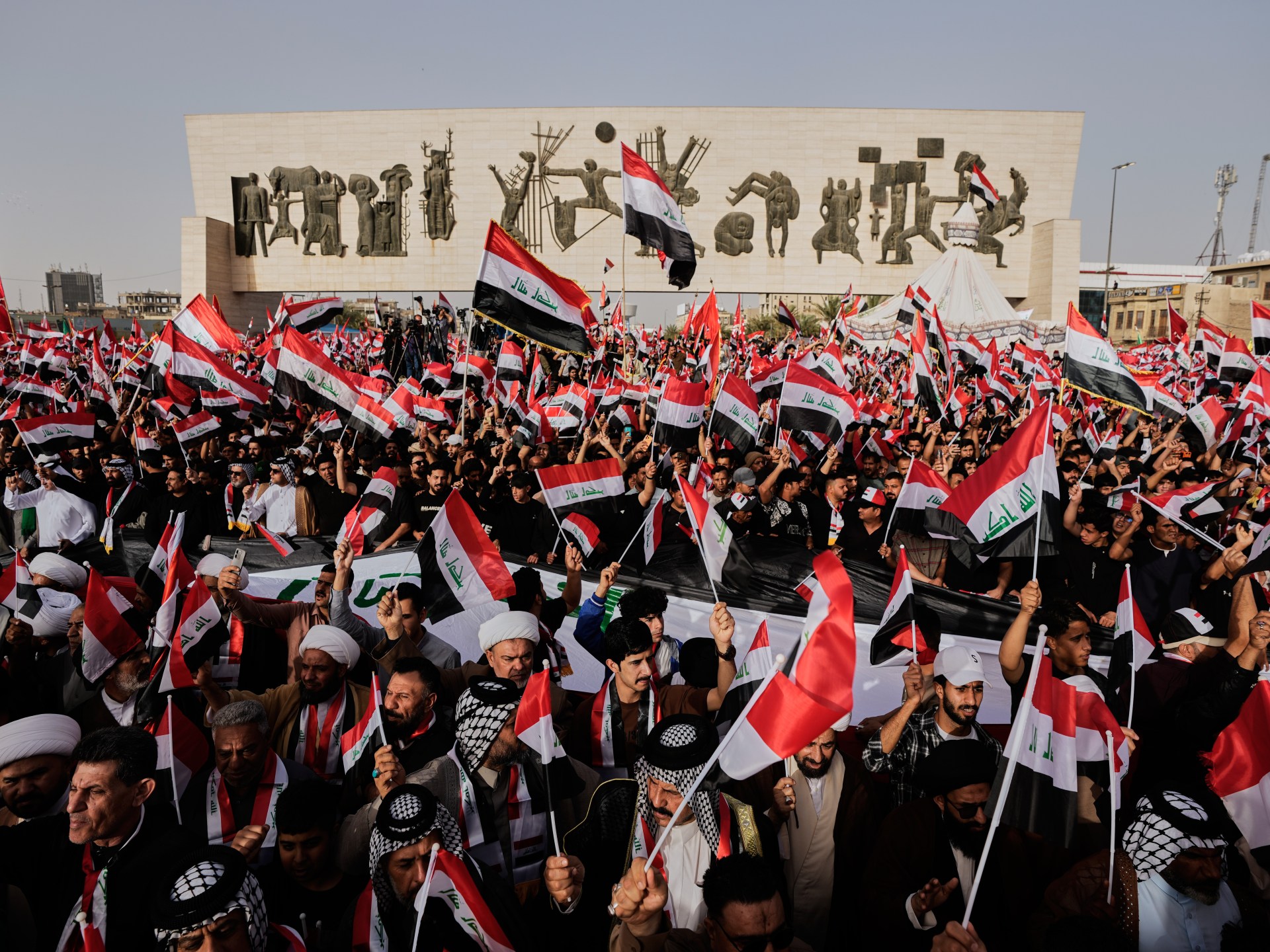
Across Baghdad and several key Iraqi cities, tens of thousands of supporters of influential Shia leader Muqtada Sadr recently rallied in a powerful demonstration against what they perceive as a "US-Israel war on Iran." These widespread protests underscore the deep-seated tensions and growing instability permeating the Middle East, a situation with significant implications for global security.
The demonstrations, spanning from the capital to southern strongholds like Basra, Nasiriya, Hilla, and Najaf, saw participants chanting "No to America, no to Israel." Their collective voice demanded an end to US military presence in Iraq, condemned the targeting of the Palestinian people, and called for a unified Iraqi stance against external aggression. This mobilization by Sadr's movement, historically a vocal critic of foreign intervention, highlights a profound rejection of Iraq being unwillingly drawn into regional proxy conflicts.
These rallies are not isolated events but a direct response to a rapidly escalating regional environment. The ongoing conflict in Gaza, coupled with recent US air strikes in Iraq and Syria targeting Iran-backed groups—strikes that were themselves a response to attacks on US bases—have fueled a dangerous cycle of retaliation. Iraq, a nation still rebuilding from years of conflict, finds itself increasingly caught in the crosshairs, facing the risk of becoming a primary battleground for broader geopolitical struggles.
For families and businesses globally, such regional instability carries tangible risks. Beyond the immediate humanitarian concerns, these tensions disrupt global supply chains, drive energy market volatility, and exacerbate the threat landscape for international trade and travel. From a security perspective, the potential for these conflicts to spill over geographically or into the cyber realm is a grave concern. State-sponsored cyber actors, often linked to such geopolitical rivalries, can launch sophisticated attacks that target critical infrastructure, spread disinformation, and compromise data integrity, affecting individuals and corporations far from the immediate conflict zones.
Law enforcement and security agencies worldwide must contend with the ripple effects of such events, including increased threats of extremism, the challenges of monitoring information warfare, and the complex task of maintaining domestic security amidst international turmoil. Understanding the nuanced interplay between regional grievances, political leadership like Sadr's, and global power dynamics is crucial for developing effective preventative and responsive security measures.
The unified message from these Iraqi protests serves as a potent reminder: de-escalation is paramount. The global community's collective efforts toward diplomatic solutions and conflict resolution are vital to prevent a wider conflagration that would have devastating consequences for peace, economic stability, and the safety of citizens worldwide. As we navigate an increasingly interconnected world, understanding these complex geopolitical currents is essential for personal, national, and global security in the digital age.
365 Intelligence
Protesters chant against the US and Israel, urging the global community to confront their actions in the Middle East.
Thousands of Iraqi protesters, led by Muqtada Sadr's supporters, rallied across key cities to condemn perceived US-Israeli aggression and demand an end to foreign military presence, highlighting esca…
April 6, 2026·Sentry365 News Team·2 min read