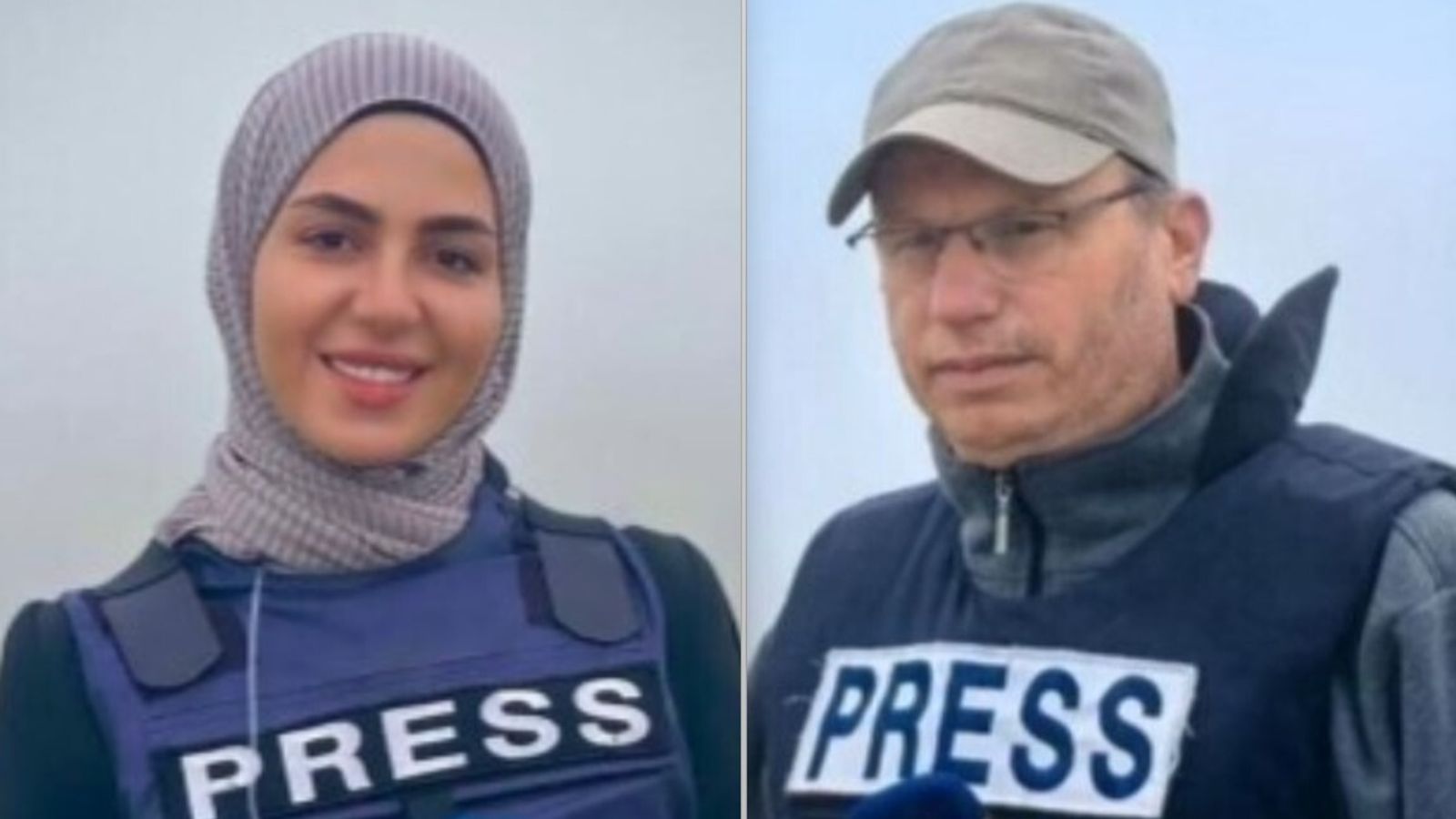
In a stark reminder of the perils faced by those who bring us news from conflict zones, three Lebanese television journalists were tragically killed on Saturday in an Israeli airstrike in southern Lebanon. This incident not only represents a profound loss for their families and colleagues but also underscores the critical, often dangerous, role of the press in illuminating the realities of global security challenges.
The victims, identified as Fatima Ftouni, a reporter for Al Mayadeen, Ali Shoaib, a correspondent for Al Manar, and Mohammed Ftouni, a cameraman and Fatima's brother, were traveling in a car near the city of Tyre when their vehicle was struck. These individuals were on assignment, fulfilling their vital duty to document and report on the escalating tensions near the Israeli border. Their deaths have drawn immediate condemnation and renewed calls for accountability from international bodies and media organizations.
From a security and legal standpoint, this incident raises serious questions regarding the protection of non-combatants, particularly journalists, under international humanitarian law. Journalists operating in conflict areas are explicitly recognized as civilians and are entitled to protection, provided they are not directly participating in hostilities. The use of advanced targeting technology, while often touted for its precision, places an immense burden of responsibility on military forces to ensure that strikes adhere strictly to the principles of distinction and proportionality. Any incident resulting in civilian casualties, especially those with clearly identifiable non-combatant roles, warrants a thorough, impartial investigation to ascertain the facts and ensure compliance with international legal frameworks. Organizations like Reporters Without Borders have explicitly called for such an investigation to determine if the journalists were deliberately targeted, an accusation that, if proven, would constitute a grave breach of international law. The Israeli military stated it struck a 'terrorist operating from Lebanon,' emphasizing precision intelligence, but did not specifically address the identity of the casualties or acknowledge their journalistic status. This highlights the urgent need for transparency and independent verification in such incidents.
The tragic loss of Fatima Ftouni, Ali Shoaib, and Mohammed Ftouni serves as a poignant reminder of the human cost of conflict and the immense bravery of journalists who risk their lives to inform the world. Their work is indispensable for holding power to account, exposing atrocities, and fostering public understanding of complex geopolitical events. For families and citizens, these events underscore the importance of discerning reliable information and supporting organizations that champion press freedom. For prospective clients in security and technology sectors, it highlights the paramount importance of ethical considerations, robust oversight, and adherence to international legal norms in the development and deployment of security solutions. Ensuring the safety of journalists is not just an ethical imperative; it is fundamental to the health of our democracies and our shared global security.
As the world grapples with ongoing conflicts, the safety of journalists must remain a top priority. We must collectively advocate for stricter adherence to international law, transparent investigations into incidents involving civilian harm, and a steadfast commitment to protecting those who courageously bring us the truth from the front lines.
365 Intelligence
Fatima Ftouni, an Al Mayadeen reporter, Ali Shoaib, an Al Manar correspondent, and Ms Ftouni's brother, cameraman Mohammed Ftouni were killed.
Three Lebanese television journalists, Fatima Ftouni, Ali Shoaib, and Mohammed Ftouni, were tragically killed in an Israeli airstrike in southern Lebanon, sparking international condemnation and urge…
March 30, 2026·Sentry365 News Team·2 min read