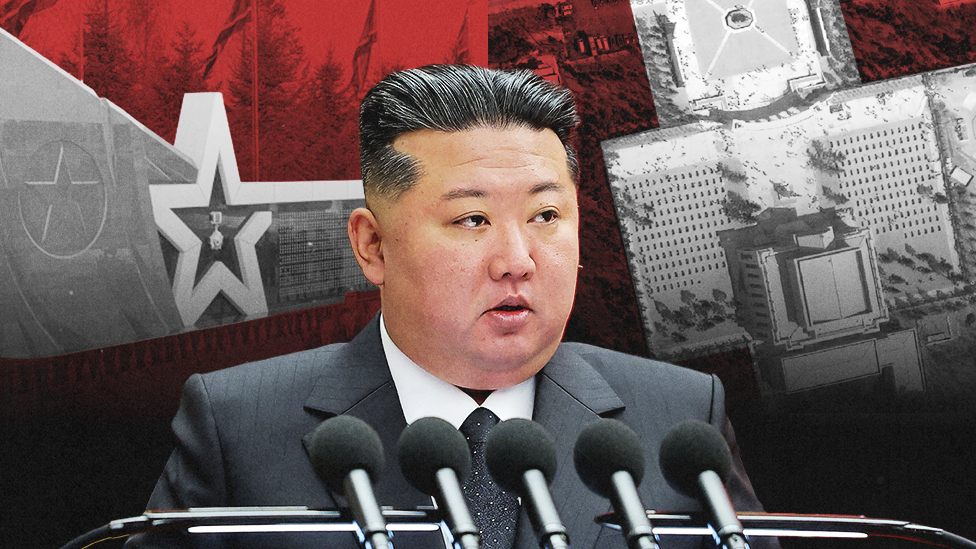
The revelation that North Korean soldiers are actively engaged in Russia's war against Ukraine, with an estimated 11,000 deployed and at least 2,300 confirmed dead, marks a deeply troubling escalation in global security dynamics. This isn't just a distant conflict; it’s a stark reminder of the interconnectedness of international security and the profound human cost of geopolitical maneuvers.
A meticulous BBC investigation, leveraging satellite imagery and official photographs of a newly unveiled memorial in Pyongyang, has provided undeniable evidence of North Korea's direct military involvement. This investigation meticulously pieced together the narrative, confirming the tragic reality of North Korean lives lost on foreign battlefields. The scale of casualties, representing a significant portion of the deployed force, underscores the brutal intensity of the conflict and the perilous conditions these soldiers face.
From a security perspective, this development carries multiple layers of concern. For Russia, the deployment of North Korean forces provides a potential influx of manpower, potentially mitigating some of the domestic political pressure associated with further large-scale mobilization. It also deepens military cooperation between the two nations, a relationship that has already seen North Korea supply Russia with significant quantities of artillery shells and ballistic missiles in exchange for advanced military technology and economic aid.
For North Korea, this arrangement serves several strategic purposes. It offers a crucial avenue to circumvent international sanctions, providing a stream of hard currency and essential resources. Furthermore, it allows North Korea to gain valuable combat experience for its military personnel and potentially test its weaponry in real-world conditions, all while bolstering its geopolitical standing by aligning with a major power like Russia. This alignment also positions North Korea as a critical player in challenging the existing international order, a long-held ambition.
However, the human toll cannot be overstated. These soldiers, many likely conscripted or facing immense pressure to volunteer, are sent to fight in a war far from home, for objectives that may not directly align with their personal interests. Their deaths represent a profound loss, not just for their families, but for the universal principle of human dignity and the laws of armed conflict. The clandestine nature of their deployment and the lack of transparency surrounding their service raise significant ethical questions about accountability and the treatment of combatants.
For families, prospect clients, and middle-class citizens watching these events unfold, it's vital to understand the broader implications. Such proxy deployments exacerbate conflicts, prolong suffering, and create new precedents for international military engagement. They challenge the established norms of sovereign conduct and international law, potentially leading to a more volatile global landscape. The technologies used for verification, like satellite imagery, are themselves a testament to how information can pierce through secrecy, holding actors accountable.
Ultimately, the presence of North Korean soldiers in Ukraine is a sobering indicator of the complex, often dark, currents shaping our world. It demands our attention, not just as a piece of news, but as a critical development that underscores the urgent need for diplomatic solutions, adherence to international law, and a steadfast commitment to human rights amidst escalating global tensions.
365 Intelligence
An estimated 11,000 North Korean soldiers were sent to fight in Russia's war against Ukraine.
A BBC investigation reveals that approximately 11,000 North Korean soldiers were deployed to fight for Russia in Ukraine, with at least 2,300 confirmed dead, highlighting a grim escalation in global…
May 10, 2026·Sentry365 News Team·2 min read