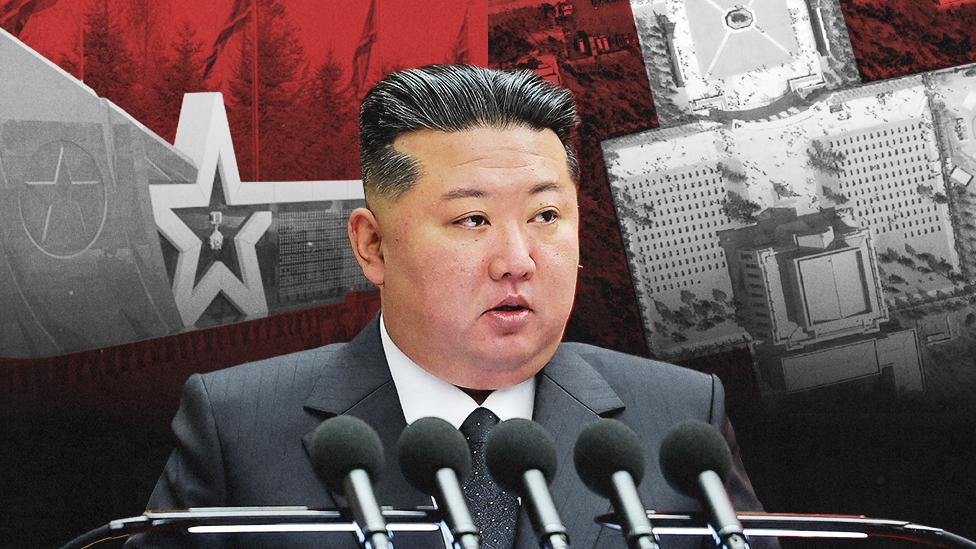
A recent BBC investigation has brought to light a stark and unsettling development in the ongoing conflict in Ukraine: an estimated 2,300 North Korean soldiers have died fighting for Russia. This revelation, derived from meticulous analysis of satellite images and official photographs of a newly erected memorial in Pyongyang, unveils a tragic human cost and underscores profound shifts in global geopolitics.
The investigation indicates that these 2,300 casualties are part of a much larger deployment. South Korean defense officials and other intelligence sources estimate that between 11,000 and 12,000 North Korean troops have been sent to support Russia's war efforts since late 2023. The Pyongyang memorial, seemingly dedicated to "volunteer fighters" of a "special military operation," offers a grim testament to a reality North Korea officially denies, referring to such reports as mere "fabrication."
For North Korea, the motivations behind sending its citizens to a foreign war appear to be rooted in economic desperation and strategic ambition. The regime likely seeks substantial financial remuneration, including food, raw materials, and hard currency, from Russia. Crucially, this cooperation also serves as a conduit for North Korea to acquire advanced Russian military technology, potentially accelerating its own ballistic missile and nuclear programs, posing a direct threat to regional and global security. For Russia, these troops represent a readily available source of manpower, effectively used as "cannon fodder" in brutal frontal assaults, supplementing their own forces and the ammunition supplies North Korea has also been providing.
The human story behind these numbers is particularly harrowing. Reports suggest that these soldiers, often recruited from older, poorer backgrounds within North Korea's military and security services, were enticed by promises of high wages—initially around $2,000 a month, though often reduced to $1,000 and frequently withheld. Eyewitness accounts and intelligence paint a picture of ill-equipped, poorly trained individuals thrust into the most dangerous combat zones, suffering disproportionately high casualty rates. This exploitation raises significant humanitarian concerns, highlighting a severe disregard for human life.
This military cooperation is a blatant violation of multiple United Nations Security Council resolutions, including 1718 (2006) and 1874 (2009), which strictly prohibit North Korea from exporting conventional arms and engaging in related materiel cooperation. The deepening military-economic alliance between Russia and North Korea not only undermines international law but also destabilizes global security frameworks. It challenges the established international order and presents a dangerous precedent for nations seeking to circumvent sanctions and international norms through illicit alliances.
As families and communities grapple with an increasingly complex global landscape, understanding these developments is crucial. The use of advanced investigative techniques, like satellite imagery analysis, plays an ever-more critical role in uncovering hidden truths and holding states accountable. The tragic deployment and loss of North Korean lives in Ukraine serve as a stark reminder of the interconnectedness of global conflicts and the profound impact on human lives when international law is disregarded. Vigilance, informed awareness, and a commitment to upholding international security frameworks are more vital now than ever.
365 Intelligence
An estimated 11,000 North Korean soldiers were sent to fight in Russia's war against Ukraine.
A BBC investigation reveals an estimated 2,300 North Korean soldiers have died fighting for Russia in Ukraine, underscoring the severe human cost and profound geopolitical implications of this hidden…
May 10, 2026·Sentry365 News Team·2 min read