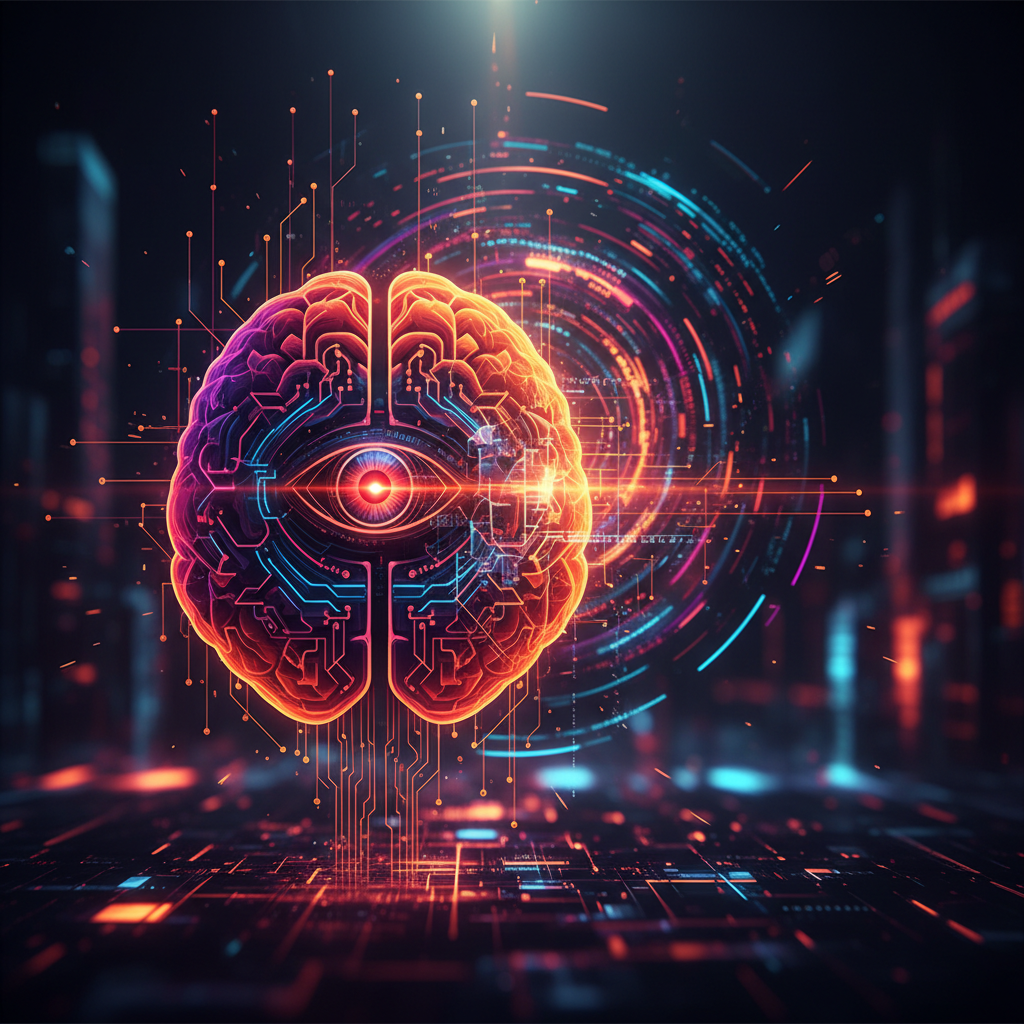
The integration of Artificial Intelligence (AI) into the fabric of digital operations has undeniably reshaped every industry, and cybersecurity is no exception. Far from a mere buzzword, AI has become a critical, double-edged sword within the cyber domain, simultaneously empowering defenders with unprecedented capabilities while furnishing adversaries with tools for more sophisticated and scalable attacks. Understanding this duality is paramount for technical professionals charged with safeguarding digital assets.
On the defensive front, AI's analytical prowess offers a transformative advantage. Machine learning algorithms excel at processing vast quantities of data – logs, network traffic, endpoint telemetry – to identify anomalous behaviors that might signal an impending or ongoing attack. Unlike traditional signature-based detection, AI-driven systems can spot novel threats, zero-days, and polymorphic malware by recognizing patterns that deviate from established baselines. This capability extends to predictive threat intelligence, vulnerability management by prioritizing patches based on exploit likelihood, and significantly accelerating incident response through automated triage and containment. Security Orchestration, Automation, and Response (SOAR) platforms, heavily leveraging AI, are increasingly central to modern Security Operations Centers (SOCs), allowing human analysts to focus on complex strategic challenges rather than repetitive manual tasks.
However, the same technological advancements accessible to defenders are equally available to malicious actors, fueling an escalating cyber arms race. Adversaries are rapidly weaponizing AI to enhance their offensive campaigns. Large Language Models (LLMs), for instance, are being exploited to generate highly convincing phishing emails, social engineering scripts, and even malicious code, often tailored to specific targets with uncanny accuracy. This significantly lowers the barrier to entry for attackers and increases the volume and sophistication of attacks. AI can also be used to automate reconnaissance, identify vulnerabilities in target systems more efficiently, and develop sophisticated evasive malware that adapts its behavior to bypass detection mechanisms. The rise of AI-powered botnets capable of learning and evolving their attack patterns represents a formidable threat, making attribution and defense even more challenging.
This dynamic creates an imperative for organizations to not only deploy AI for defense but also to anticipate and counter AI-driven threats. Technical professionals must grapple with the challenges of data integrity, ensuring the training data for defensive AI models is not poisoned by adversaries. They must also confront the 'explainability' problem, where complex AI decisions can be opaque, hindering trust and validation. Furthermore, securing the AI supply chain – from data sources to model deployment – is becoming a critical cybersecurity concern.
Navigating this complex landscape requires a multi-faceted approach. Organizations must invest in robust AI-powered security solutions, develop internal expertise in AI and machine learning, and cultivate a security culture that recognizes the evolving threat model. It's not enough to simply adopt AI; one must understand its limitations, biases, and potential for misuse. The future of digital trust hinges on our collective ability to harness AI's defensive potential while strategically mitigating the advanced threats it enables.
365 Intelligence
AI at the Forefront: Navigating the Evolving Cyber Threat Landscape
Artificial intelligence is rapidly reshaping the cybersecurity domain, presenting both unprecedented defensive capabilities and sophisticated new attack vectors that demand adaptive strategies from t…
February 9, 2026·Sentry365 News Team·2 min read